Gibsons Landing, the harbour at the start of the coast
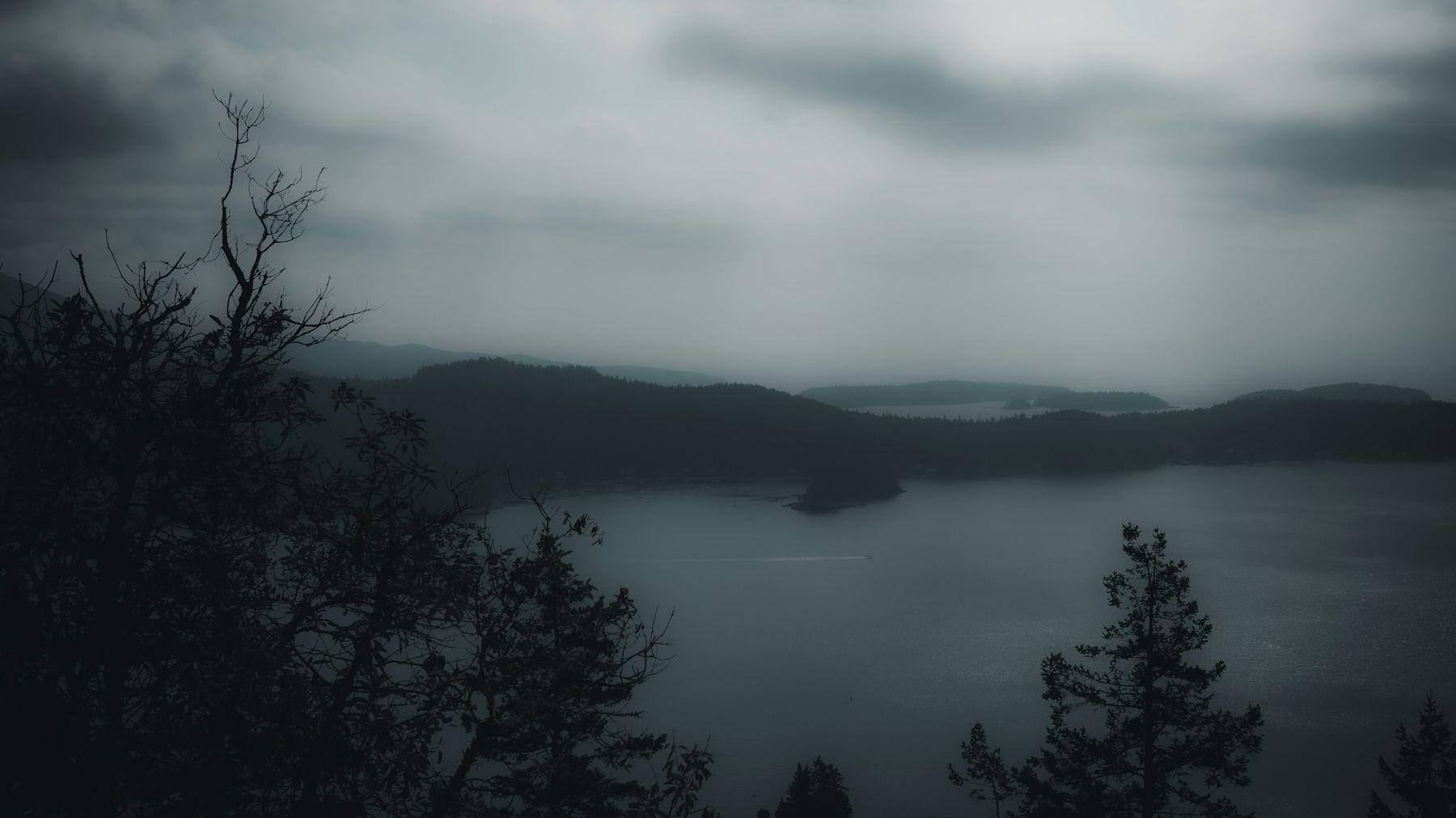
Minutes from the Langdale ferry, Gibsons spills down a hillside to a busy little harbour. Walk the wharf and seawall, climb for Howe Sound views, and let the tide set your pace.
 © Anastase Maragos / Unsplash
Gibsons is the first town on the Sunshine Coast, and for many people it becomes the one they remember best. It sits on the west shore of Howe Sound, a few minutes from the Langdale ferry, and it comes in two parts. Upper Gibsons gathers along Highway 101 with the supermarkets, the gas stations and the practical business of a small town. Lower Gibsons, the part people mean when they say Gibsons Landing, tumbles down a steep hillside to a sheltered harbour full of fishing boats, pleasure craft and floating homes.
The Landing is small enough to cross on foot in a few minutes and interesting enough to fill a slow day. The harbour looks out over the water towards Keats Island and the mountains beyond, and the light on the boats at the end of a summer evening is reason enough to stay for dinner rather than rushing on up the coast.
A harbour town on Howe Sound
The lands around Gibsons lie within the territory of the Squamish Nation, whose people have lived and travelled along Howe Sound for thousands of years. Settlers arrived in the late nineteenth century, and the town takes its name from George Gibson, an early settler who came ashore here in the 1880s. For decades the Landing was a steamer stop, the place where boats from Vancouver delivered people, mail and supplies before any regular car ferry ran.
Later, Gibsons became familiar to television viewers across Canada as the setting of a long-running series about log salvagers, filmed on the waterfront from the early 1970s to around 1990. The show still draws curious visitors, but the town has moved on into a quieter role as a harbour village with galleries, food and a strong community of artists and boat people. It also takes pride in its drinking water, drawn from a natural aquifer beneath the town.
 © Anastase Maragos / Unsplash
The wharf, the market and the harbour
Start at the public wharf at the foot of the hill. Commercial fishing boats tie up alongside visiting yachts, and in season you may see catches being unloaded or prawn traps stacked on deck. The floats move with the tide, so the walk down the ramp can be gentle or steep depending on the hour. Harbour seals often patrol the water between the floats, and herons stand motionless on the breakwater.
Close to the water is a public market building where local growers, bakers and makers sell their goods, with a marine education centre on site that gives a close look at the creatures of Howe Sound. Opening days and hours change with the season. Around it, the streets of the Landing hold small galleries, bookshops and places to eat, most of them in older wooden buildings with harbour views.
The harbour itself is the main attraction. Floating homes line part of the marina, painted in bright colours and decked with plants. Sitting on a bench above the water with something warm in your hands, watching the boats come and go, is a fine way to spend an hour.
Walking the seawall and the beaches
A seawall walk runs along the harbour front, linking the Landing with the shoreline to the north. It is short and level, ideal for an evening stroll. At low tide the rocks and shallows below the wall show off sea stars, barnacles and crabs, and at high tide the water laps right up against the stones.
Sitting on a bench above the water with something warm in your hands, watching the boats come and go, is a fine way to spend an hour.
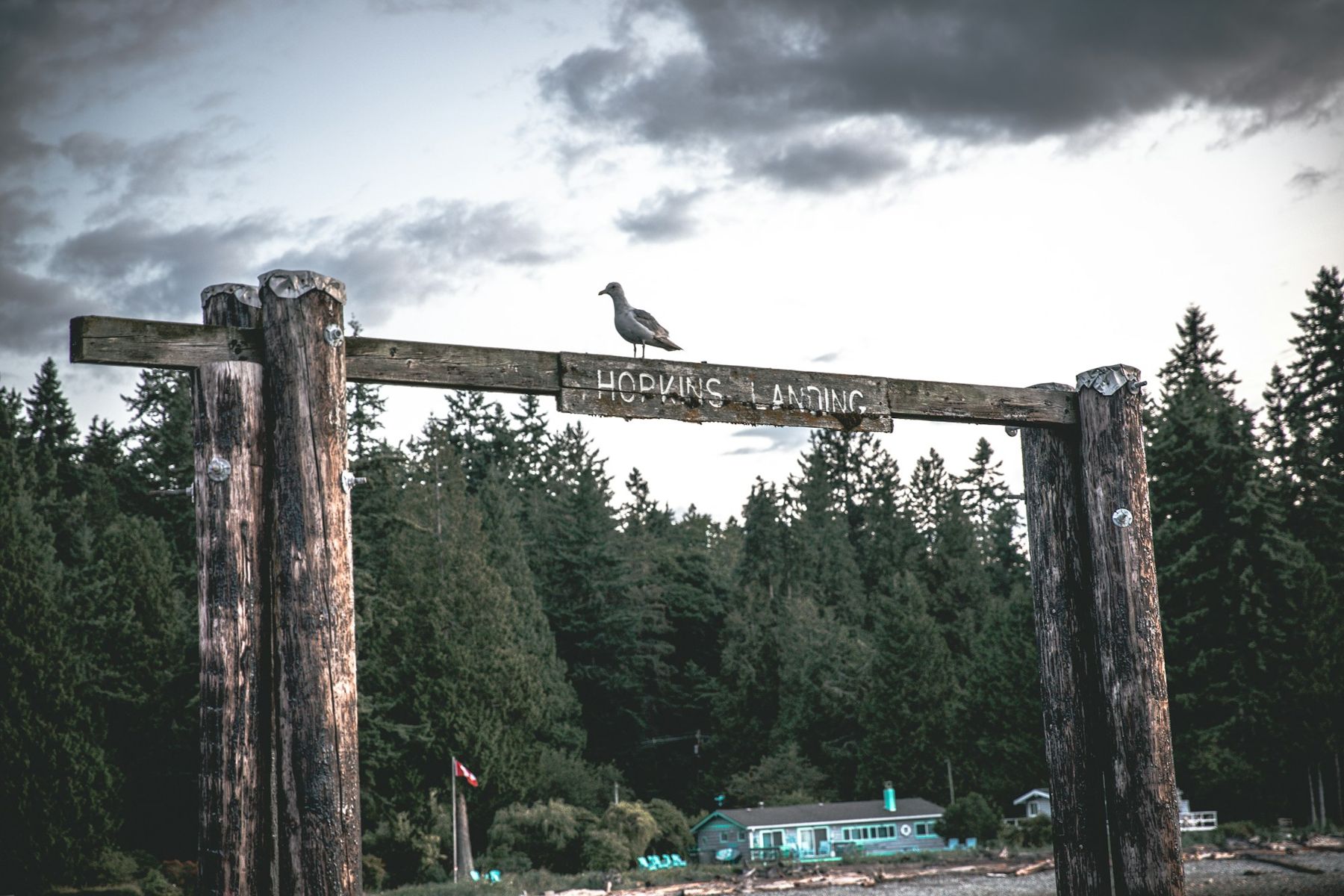
South of the harbour, the road runs along the shore past pebble beaches where families swim in summer. The water in Howe Sound stays cool even in August, so a swim is usually brisk. North of the Landing, the shoreline road leads back towards Granthams Landing and Hopkins Landing, two former steamer stops with small wharves and views straight across the sound. They make good places to stop for a look on the way to or from the ferry. Treat the small wharves as shared spaces: residents use them for boats and swimming, and parking near them is very limited.
Across the waterRoberts Creek, the pier and the painted mandala- Bring footwear you can get wet. Barnacle-covered rock is sharp, and sandals that stay on in the water are useful.
- Leave tide pool creatures where you find them, and turn rocks back the way they were.
- Watch the tide on the flats. It comes in faster than it seems.
Above town: forest and views
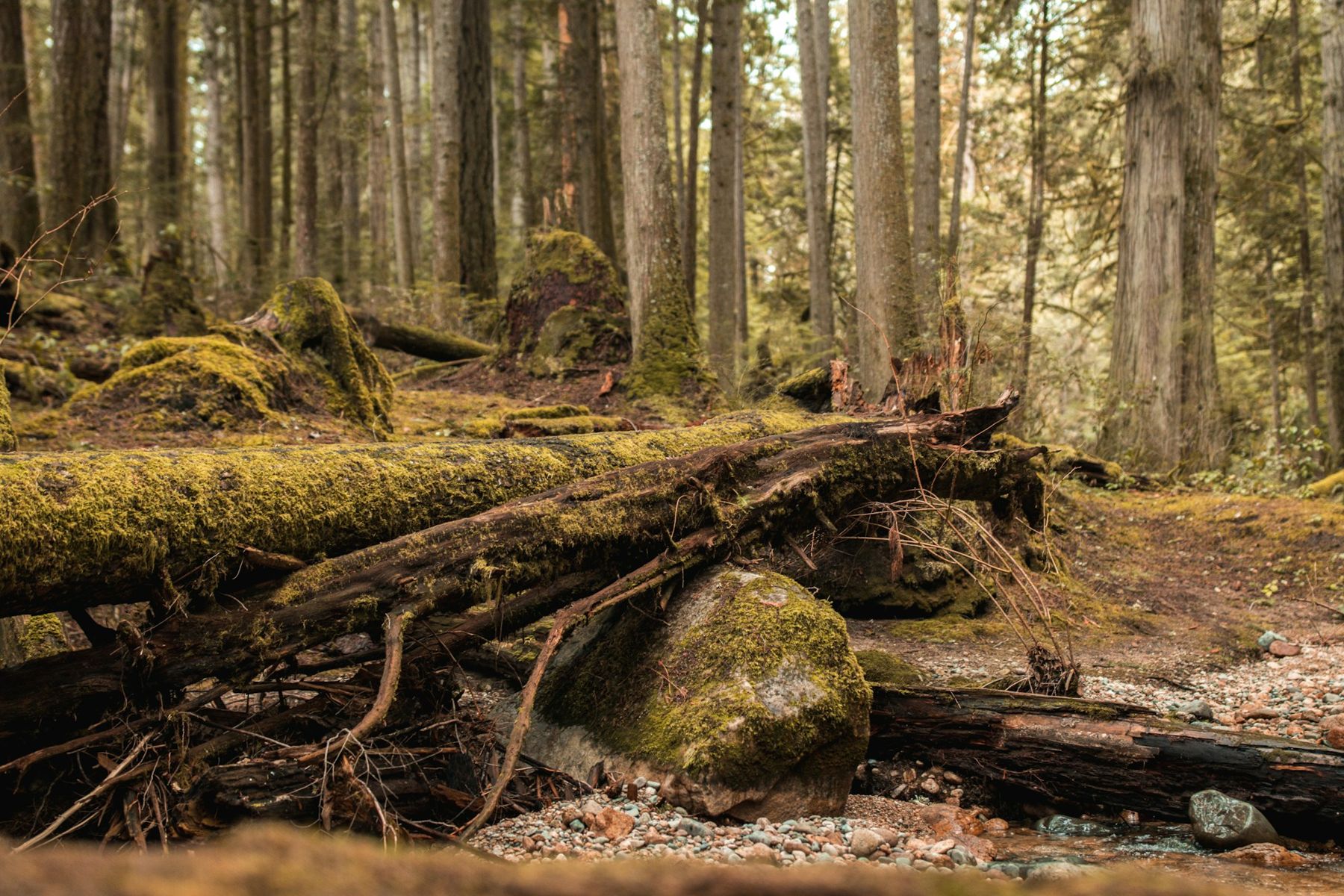
Behind Gibsons, the land rises steeply into second-growth forest of cedar, fir and hemlock. Soames Hill, a short drive from the Landing towards the ferry, is a local favourite: a steep climb on stairs and switchbacks through the trees to rocky viewpoints over Howe Sound, Keats Island and the ferry route. It is a short hike, but the stairs work your legs, so take water and go steady.
 © Anastase Maragos / Unsplash
Further up the slope, the forest trails of Mount Elphinstone climb towards old-growth patches and quiet creeks. These trails are longer and rougher, often shared with mountain bikers and laced with logging roads, and they suit people who are comfortable with route-finding. In wet months the creeks run loud and the moss glows; in late summer the forest is dry and fire rules may apply.
Black bears live in the forests around Gibsons and sometimes wander through town in late summer and autumn. Keep food and garbage secured, give any bear a wide berth, and follow posted advice.
Getting around and when to go
From the Langdale ferry terminal, Gibsons is a short drive or bus ride. If you arrive as a foot passenger, the walk along the shore road is possible but narrow in places and hilly, so many people take the bus. Once in the Landing, everything is on foot. Parking in the lower town can be tight on summer weekends, and arriving earlier in the day helps.
Summer brings warm, dry days, the busiest harbour and the fullest calendar of community events. Late spring and early autumn are quieter, with softer light and fewer people, and many visitors think they show the town at its best. Winter is wet and grey, but the harbour still works through the season, and a stormy afternoon watching rain sweep across Howe Sound has its own appeal.
Gibsons also makes a practical base. From here you can head up the coast to Roberts Creek and Sechelt in under an hour, or simply stay put, walk the harbour twice a day and watch how the tide changes everything.
Further up the coast
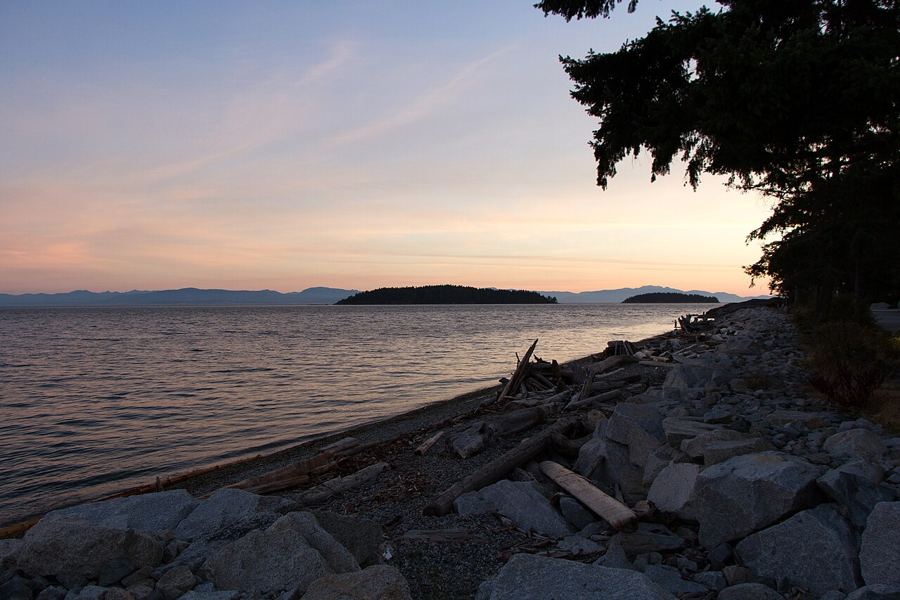 Sechelt, a town between two waters
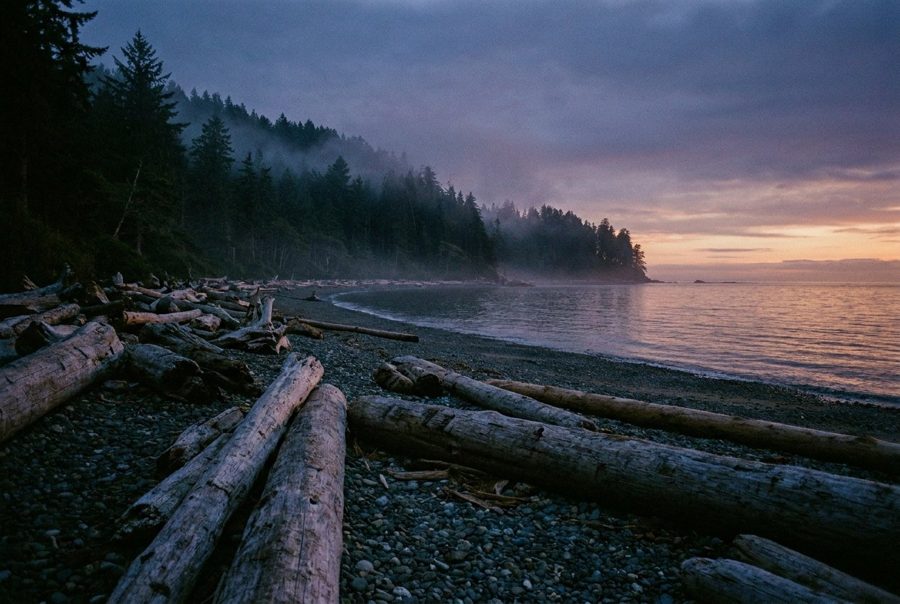 The shíshálh Nation and its lands
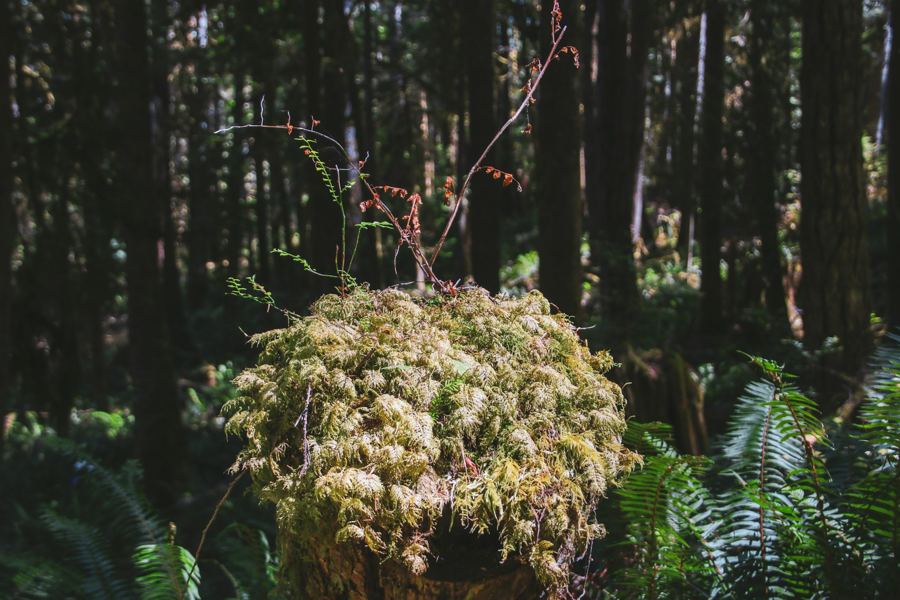 Mount Elphinstone and the forest trails
Camera work: Ken McMillan from Sechelt, BC, Canada / CC-BY-2.0; Li-Ling Chang / Unsplash
