The shíshálh Nation and its lands
The inlets, beaches and rivers of the Sunshine Coast are the homelands of the shíshálh people. Learning a little of their history changes how you see every shore you visit.
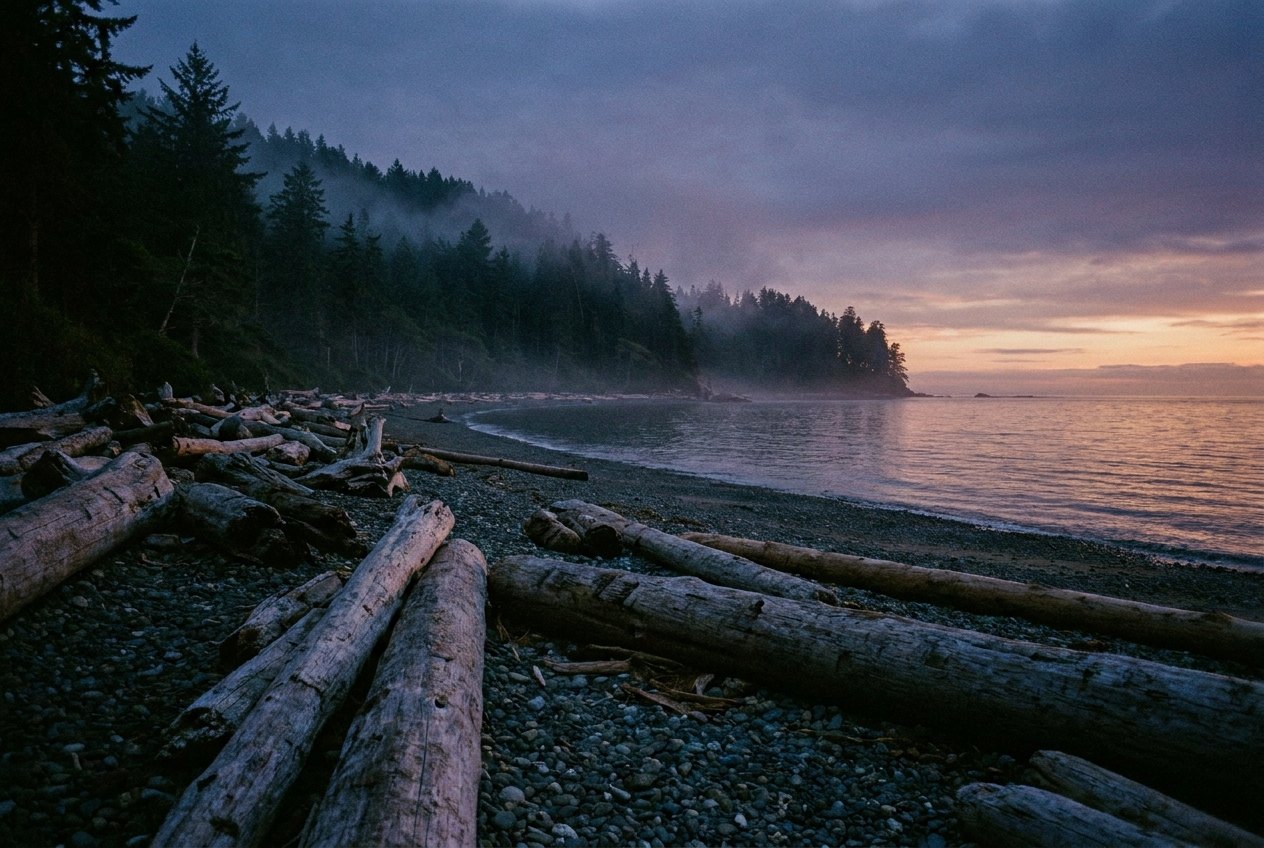
Long before ferries crossed Howe Sound or a highway ran up the coast, the shíshálh people lived along the shores and inlets now known as the Sunshine Coast. Their homelands take in Sechelt Inlet and its arms, Narrows Inlet and Salmon Inlet, Jervis Inlet with its deep fjords, Pender Harbour and the shoreline facing the Strait of Georgia. The name of the town of Sechelt comes from the Nation's own name.
Visitors often arrive knowing almost nothing about this history. That is understandable, but a little knowledge makes a big difference. It helps you see why certain places are protected, why signs carry names in another language, and why the coast's story is much longer than its towns suggest.
A people of the inlets
The shíshálh people have lived on this coast for thousands of years. Archaeological sites throughout the region, including shell middens, village sites and stone fish traps, show a long and continuous presence. The inlets provided salmon, shellfish, herring and other foods, while the forests supplied cedar for houses, canoes, clothing and baskets.
Before contact with Europeans, the shíshálh lived in a number of villages across their territory, moving with the seasons to fish, gather and harvest. Some villages sat at the heads of inlets, near salmon rivers; others faced the open strait. Canoe travel connected these places, and the inlets were highways rather than barriers.
The arrival of settlers, missionaries and colonial governments brought profound and often devastating change. Disease, the reserve system, residential schooling and the loss of access to lands and resources reshaped shíshálh life. Many families still carry that history, and it is part of the context for everything that follows.
The shíshálh Nation today is a living community rather than a chapter in a history book. It runs its own government and programmes in areas such as education, health, culture and land management, and its members live in Sechelt, on lands across the territory and further afield. Many take part in the wider life of the coast, and the Nation is a major voice in decisions about the inlets, forests and shorelines you are visiting.
Self-government since 1986
In 1986 the shíshálh Nation became the first First Nation in Canada to achieve self-government through its own federal legislation. The arrangement replaced much of the control the Indian Act had imposed, giving the Nation authority over its own lands, laws and governance. It was a landmark at the time and remains an important reference point in Canada for Indigenous self-government.
The Nation also works with other governments on land use, resource management and reconciliation across its wider territory. These agreements continue to evolve, so older descriptions of them can quickly fall out of date.
Across the waterSechelt, a town between two watersLanguage and place names
The shíshálh language is she shashishalhem. Like many Indigenous languages in British Columbia, it was pushed to the edge by colonial policies, and today the Nation supports efforts to teach and revitalize it. You will see she shashishalhem words on signs, buildings and maps across the region, often alongside English names.
Some of these names mark villages, beaches or points; others describe what a place is like or what it was used for. Learning to recognise a few of them, and trying to say them correctly, is a small act of respect. When you see the lowercase spelling of shíshálh, keep it that way; it reflects the Nation's own usage.
Elsewhere on the coast, a few names come from Chinook Jargon, the trade language once used along the Pacific Northwest coast. The tidal rapids at Skookumchuck Narrows take their name from it, meaning strong water.
The museum and cultural centre
In Sechelt, the Nation's cultural and administrative complex near the highway houses the tems swiya Museum, which presents shíshálh art, history and culture. Exhibits include carvings, baskets, tools and archaeological material, along with stories of the Nation's past and present. It is a good place to start if you want to learn more, and a visit fits easily into a day in Sechelt.
Opening days and hours change, and there may be a small admission charge or a suggested donation. Photography rules may apply inside, so ask if you are unsure.
Visiting respectfully
Most of the beaches, inlets and parks you visit on the Sunshine Coast lie within shíshálh territory, and some are especially significant. A few simple habits go a long way:
- Respect posted signs. Some lands are reserve lands or culturally sensitive sites, and access may be limited.
- Leave shell middens, stone features, carvings and artifacts undisturbed. Many are protected by law, and all deserve care.
- Do not remove shells, stones or wood from sites that may be culturally important.
- Follow any guidance about protected areas in marine parks and along the inlets.
- Take part in public events only when they are open to visitors, and follow the hosts' lead.
Some parks and protected areas in the region are managed jointly or with input from the Nation. When you camp or paddle in places like the marine parks of Sechelt Inlet, you are a guest on lands with deep history.
Seeing the coast differently
Once you know a little of shíshálh history, the coast looks different. A quiet cove becomes a possible village site; a beach of crushed shell becomes a sign of generations of meals; an inlet becomes a travel route rather than a dead end. The towns and roads are recent additions to a much older landscape.
The best way to carry that knowledge is lightly: travel with curiosity, read what the Nation chooses to share about itself, listen when there is a chance, and leave every place as you found it.
Further up the coast
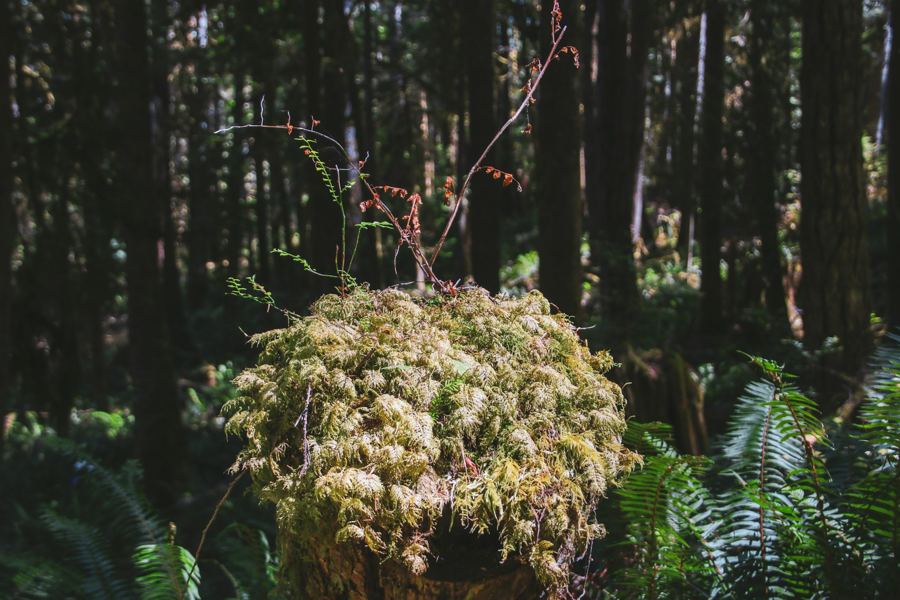 Mount Elphinstone and the forest trails
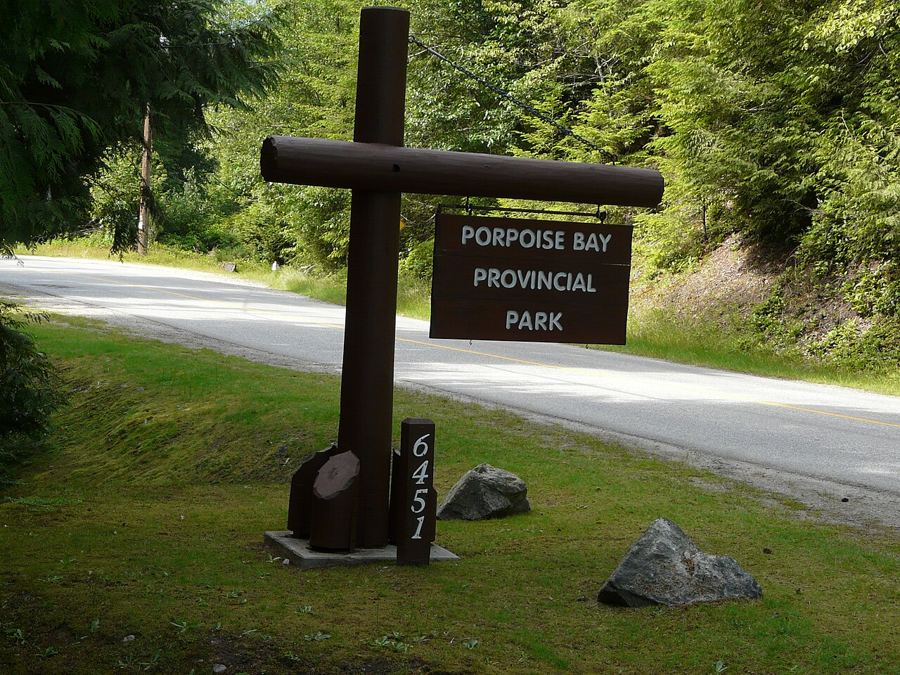 Porpoise Bay and the head of Sechelt Inlet
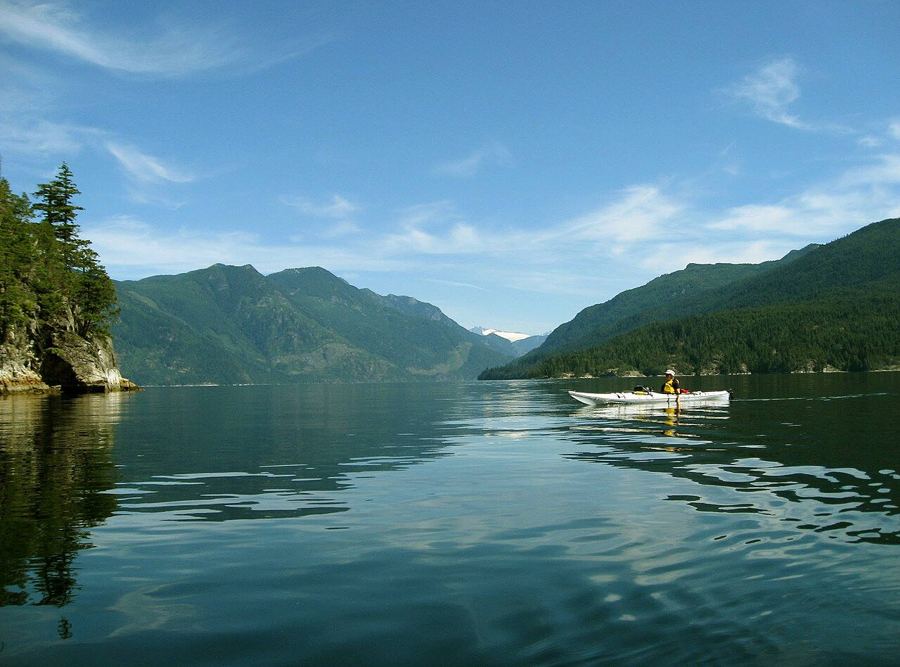 Paddling Sechelt Inlet
Camera work: Li-Ling Chang / Unsplash; Redonebird / CC-BY-SA-3.0; Ken McMillan from Sechelt, BC, Canada / CC-BY-2.0

