Orcas, seals and bears: sharing the coast with wildlife
From orcas passing in the strait to seals on the rocks and black bears on the beach, wildlife is part of daily life here. Seeing it well means giving it room.
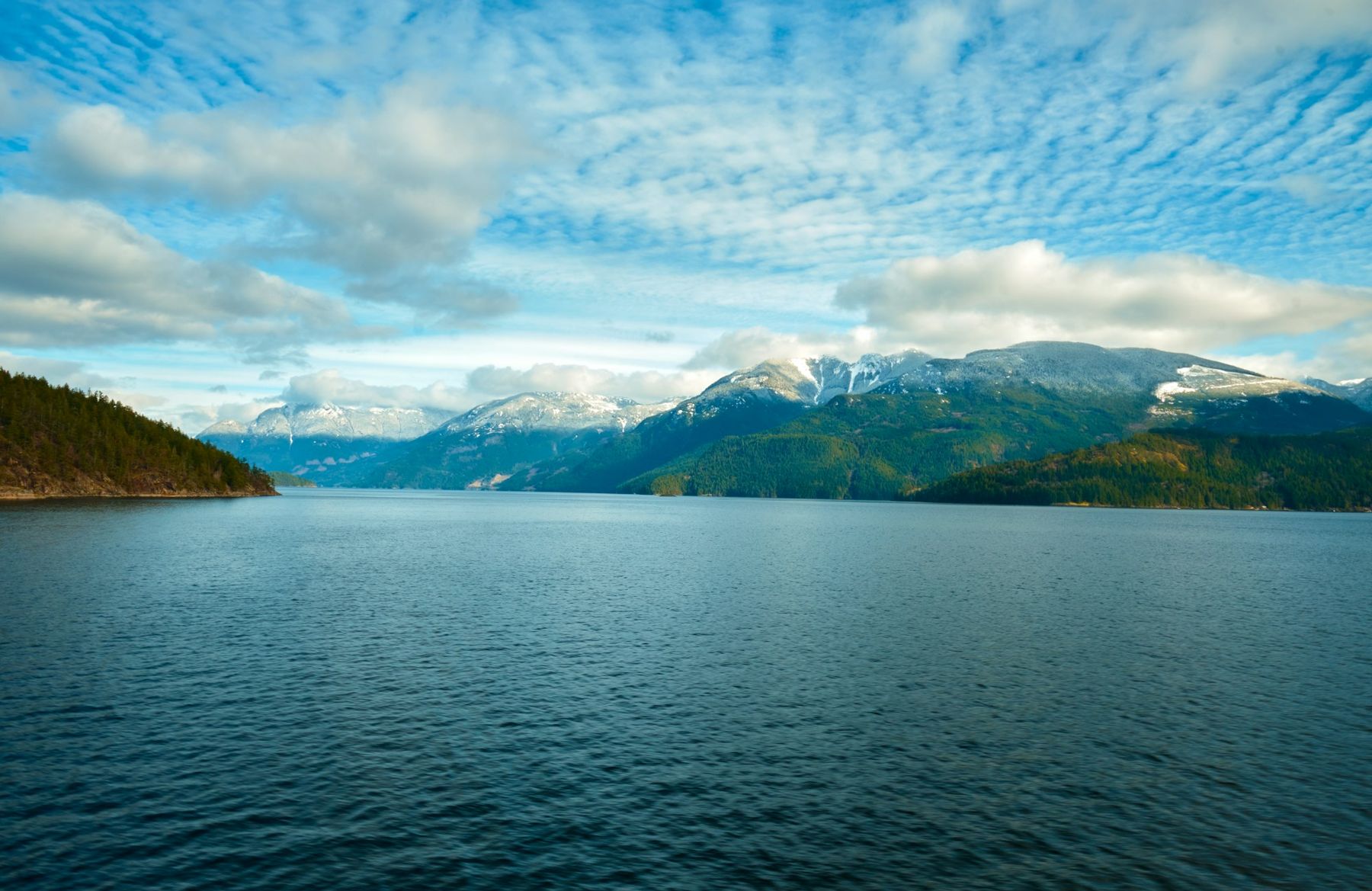 © Lucas Mitchell / Unsplash
On the Sunshine Coast, wildlife is not something you have to go far to see. Eagles watch from snags above the highway, seals surface in the harbours and black bears wander the edges of town in the autumn. With some patience and a pair of binoculars you can see a great deal from shore, from a ferry deck or from a small boat moving slowly along the edge of an inlet. The key to seeing it well is to give animals space, so that you watch them behaving naturally rather than reacting to you.
Whales, dolphins and porpoises
Several kinds of whale use the waters off the coast, especially the open Strait of Georgia.
- Orcas, or killer whales, pass through in family groups. Some eat fish, especially salmon; others hunt seals, sea lions and porpoises and sometimes follow their prey into inlets and harbours.
- Humpback whales have returned to the strait in growing numbers in recent years and are now seen fairly often, especially from spring to autumn.
- Pacific white-sided dolphins sometimes travel in large, fast groups.
- Harbour porpoises and Dall's porpoises are smaller and easy to miss, showing only a quick dorsal fin.
The ferries between Horseshoe Bay and Langdale, and across Jervis Inlet, are good places to watch. Scan the water with binoculars, look for a blow or a dark fin, and watch where seabirds gather, which often means fish.
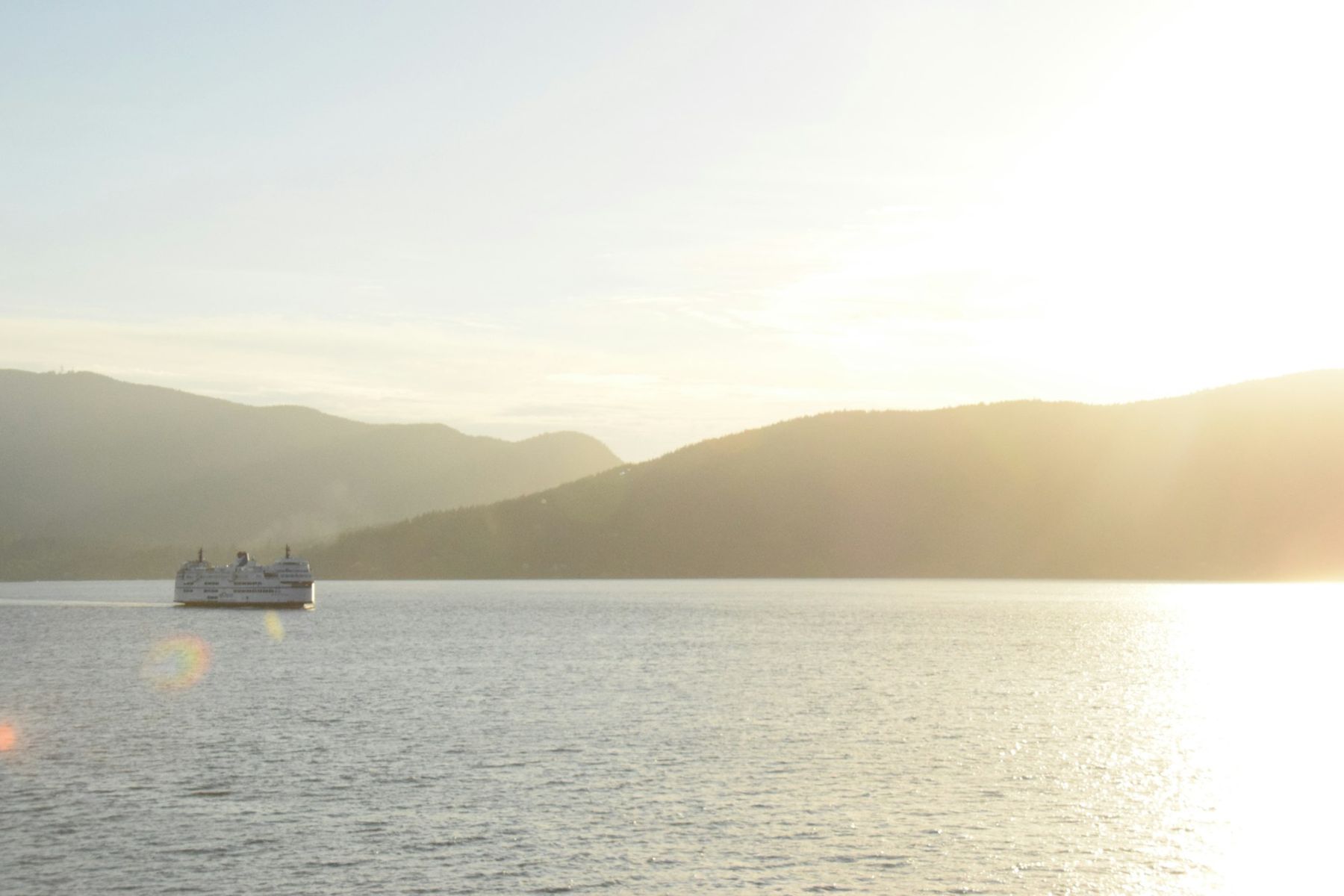 © mandylin / Unsplash
Keeping your distance on the water
Canada has legal minimum distances for approaching whales, dolphins and porpoises, and stricter rules for killer whales in southern British Columbia waters. The distances are measured in hundreds of metres for orcas, and at least a hundred metres for most other whales, with larger distances if an animal is resting or with a calf. The rules are reviewed and updated.
Some practical habits help:
- If whales appear near your boat, slow down, put your engine in neutral and let them pass. Never cut in front of their path.
- Paddlers should group together and stay close to shore. A kayak is quiet but low, and a whale may not see it.
- Limit your time watching any one group and leave slowly.
- Do not fly drones near whales; rules apply to aircraft as well.
Seals, sea lions and otters
Harbour seals are the most common marine mammals on the coast. You will see their round heads watching from the water and their spotted bodies hauled out on rocks and log booms at low tide. Steller and California sea lions appear in some seasons, especially near herring and salmon runs; they are much larger, louder and more aggressive than seals.
Across the waterTides, winds and boat sense on the inletsSeal pups are born in summer and are often left alone on beaches or rocks while their mothers feed. A pup alone is usually not abandoned. Keep people and dogs well away, and do not touch, feed or move it. If a seal on a rock lifts its head and stares at you, you are already too close; back off quietly.
River otters are often mistaken for sea otters, which do not live in these inner waters. River otters move between sea and land, cross docks, and leave trails and droppings on rocky points. They are shy, fast and fun to watch from a distance.
Black bears and cougars
Black bears live throughout the coast, from the edges of Gibsons to the far end of Desolation Sound. They are most active in spring, when they come out of their dens hungry, and in autumn, when they feed heavily before winter, often on salmon and berries.
- Store food, garbage and pet food securely, whether you are camping or in a house.
- Make noise on trails, especially near streams and berry patches, and keep dogs on a leash.
- Carry bear spray in the backcountry and know how to use it.
- If you meet a bear, stay calm, speak firmly, give it a way out and back away slowly. Do not run.
Cougars also live on the coast but are rarely seen. Keep small children close on trails, and if you ever meet one, make yourself look large, keep facing it and back away. The story on Mount Elphinstone covers trail safety in more detail.
Eagles, herons and seabirds
Bald eagles are everywhere, perched on tall snags or soaring over the water. In autumn they gather along salmon streams. Great blue herons stand motionless in the shallows at low tide or on kelp beds. In the colder months the coast fills with seabirds and waterfowl that spend the winter on sheltered water: loons, grebes, scoters, goldeneyes and many more. Sargeant Bay, Porpoise Bay and the shores of Pender Harbour are good places to start.
Respect nesting birds in spring and early summer. Keep away from nesting sites on cliffs and islets, and keep dogs from chasing birds on beaches.
Salmon and the autumn feast
From late summer into autumn, salmon return to the creeks and rivers of the coast to spawn. The runs feed bears, eagles, gulls, seals and the forest itself, as nutrients from the fish wash into the soil. Watch from banks and bridges without stepping into the water or disturbing the spawning gravel.
For the seasonal picture across the year, see the coast through the year, and for the inlets where much of this wildlife lives, Narrows Inlet.
Further up the coast
 The coast through the year
 Driving Highway 101, one road and two ferries
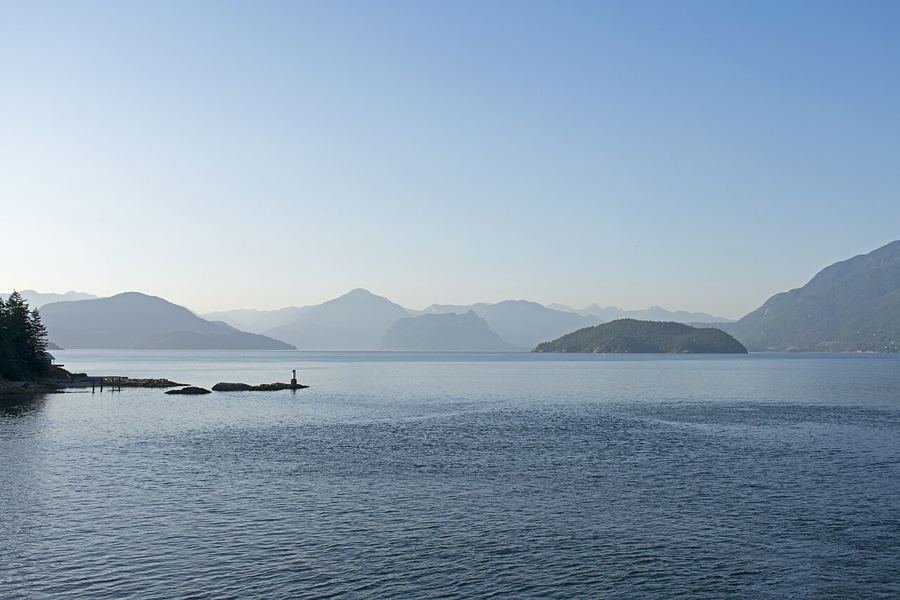 Crossing Howe Sound to the Sunshine Coast
Camera work: Ymblanter / CC-BY-SA-4.0
