Porpoise Bay and the head of Sechelt Inlet
Just north of Sechelt, a quiet road follows the inlet shore to a park with a sandy beach, forest campsites and calm water that leads north into the heart of the inlets.
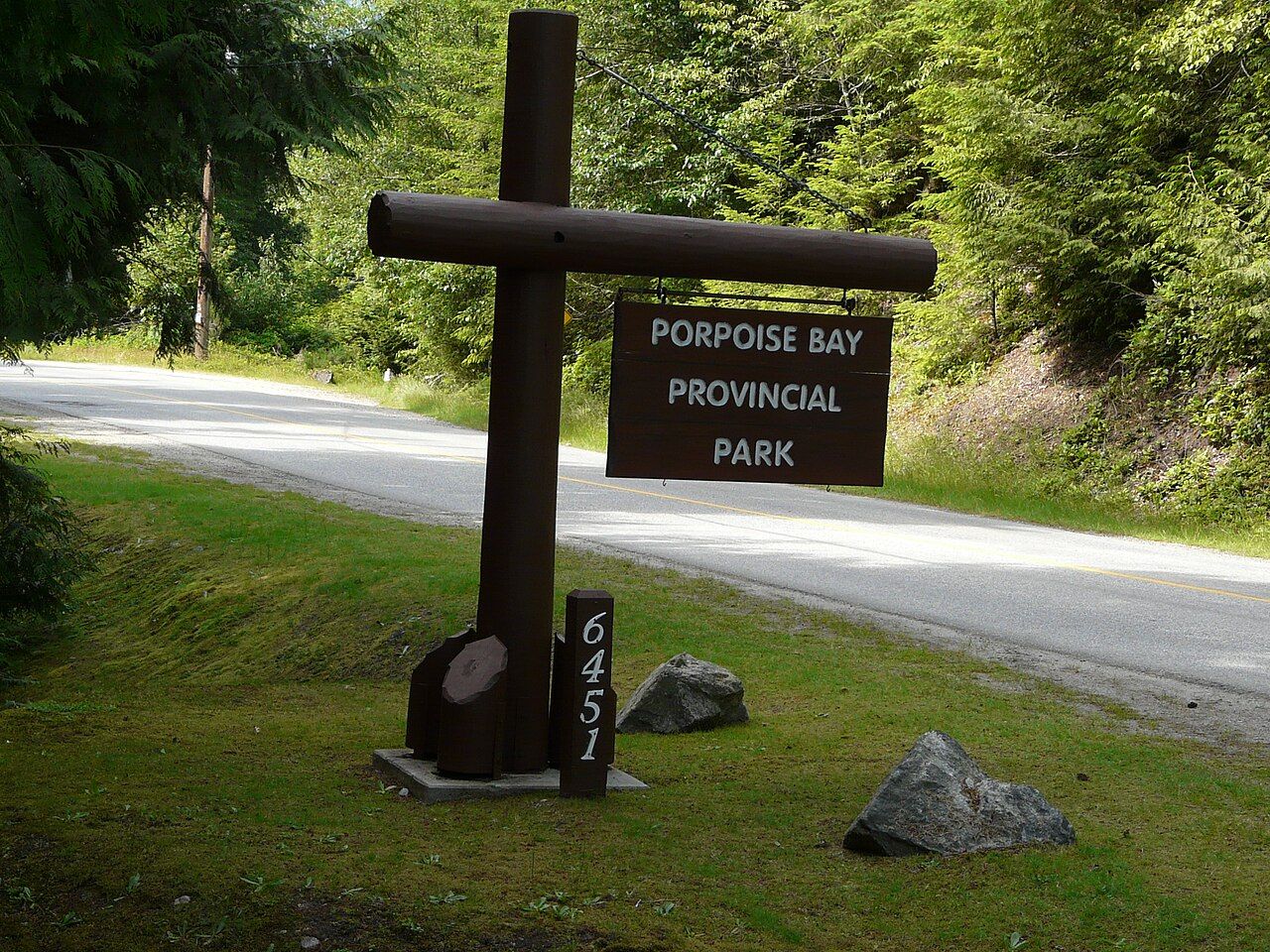 © Redonebird / CC-BY-SA-3.0
Leave downtown Sechelt heading north and within a few minutes the open Strait of Georgia is out of sight. The road follows the east shore of Porpoise Bay, the calm head of Sechelt Inlet, past houses, small wharves and stretches of forest. A short drive brings you to Porpoise Bay Provincial Park, a park of tall trees, a sandy beach and a grassy shore that has long been a favourite with families, campers and paddlers.
The park is not dramatic in the way of the fjords further up the inlet. Its appeal is gentler: warm afternoons on the sand, a swim in sheltered water, a forest campsite, and the sense that the long reach of the inlets begins right here.
The head of the inlet
Sechelt Inlet runs north from the isthmus at Sechelt for more than thirty kilometres, deep into the mountains, before connecting to Jervis Inlet through the tidal rapids at Skookumchuck Narrows. Porpoise Bay is its southern end, a broad, sheltered basin bordered by the town on one side and forested hills on the other.
Because the inlet only reaches the sea through that narrow, constricted passage far to the north, its water behaves differently from the open coast. Tides here are delayed and smaller in range than in the strait, and the surface is often glassy in the morning. That makes the bay a natural starting point for kayakers and small boats heading up the inlet. The calm can be deceptive, though: wind and cold water still demand respect.
The beach and the day-use area
The park's day-use area has a sandy beach that shelves gently into the water, a rare thing on a coast of pebbles and rock. A grassy area behind it has room for picnics, and big trees offer shade on hot days. In summer the beach is busy with families, swimmers and people launching kayaks and paddleboards.
The water in Porpoise Bay warms more than the open strait in a sunny summer, but it is still cool, and cold-water shock is a real risk for anyone who jumps in unprepared. Ease in, swim close to shore, and keep an eye on children. There is no lifeguard.
At low tide, the flats offer good beachcombing, with crabs, clams and shorebirds. Black oystercatchers, with their bright red bills, are often seen on rocks along the shore, and herons stalk the shallows. Kingfishers rattle along the treeline, and bald eagles watch from the tall firs. Keep well back from nesting birds and leave shells and stones where you find them.
Across the waterPaddling Sechelt InletAngus Creek and the autumn salmon
Angus Creek runs through the park to the inlet, and in autumn salmon return to spawn in its lower reaches. A trail follows the creek through the forest, and in the right weeks you can watch fish holding in the pools or pushing upstream over the gravel. Stay on the trail and banks, keep dogs leashed and out of the water, and avoid disturbing the fish or the spawning beds.
Salmon runs vary from year to year, and their timing depends on rain and water levels. Bears and eagles may also be drawn to the creek during the run, so stay alert.
Camping in the forest
The park's campground sits in second-growth forest a short walk from the beach, with sites tucked among tall trees. Facilities, seasons and reservation systems change. If you are arriving by bicycle or kayak, ask what options exist for travellers without a vehicle.
- Store all food and scented items securely. Bears and raccoons both visit campgrounds.
- Follow any fire restrictions. Campfire bans are common in dry summers.
- Keep noise down after dark. Sound carries across still water.
- Leave no trace on the beach or in the forest.
Launching into the inlets
For paddlers, Porpoise Bay is the gateway to the Sechelt inlets. The shore here is sheltered and the launching is easy, and the marine park sites up the inlet are within reach for multi-day trips. Read the guide to paddling Sechelt Inlet before setting out; it covers winds, distances and the dangers of the rapids at the far end.
Even on a short paddle from the park, plan around the wind. Summer afternoons often bring a breeze blowing up the inlet, which can make the return trip into the wind hard work. Many paddlers go out in the calm morning and come back before the breeze builds. Wear a lifejacket, dress for immersion and let someone know your plans. The coast's general tide and boat sense applies here as much as anywhere.
Getting there and when to go
The park is a short drive north of downtown Sechelt along the road on the east side of the inlet. Cyclists can ride there from town, though the road has hills and limited shoulder in places. There is no regular public transport to the park itself.
Summer is the busiest and warmest season, ideal for swimming and camping. Late spring brings fresh green forest and quieter days. Autumn has the salmon run, changing light and fewer people. In winter the park is quiet, wet and peaceful, and a walk on the empty beach can be its own pleasure.
Further up the coast
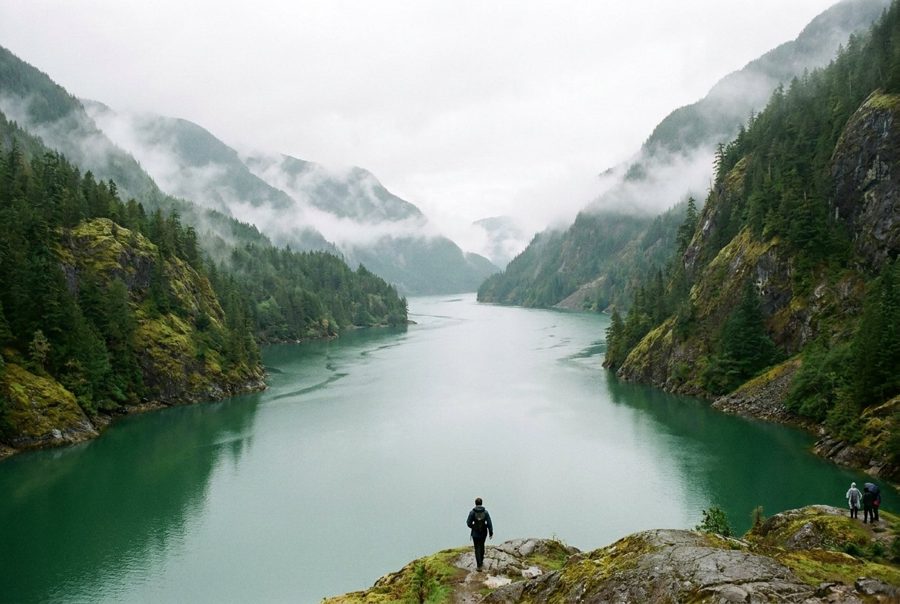 Narrows Inlet and the Tzoonie River
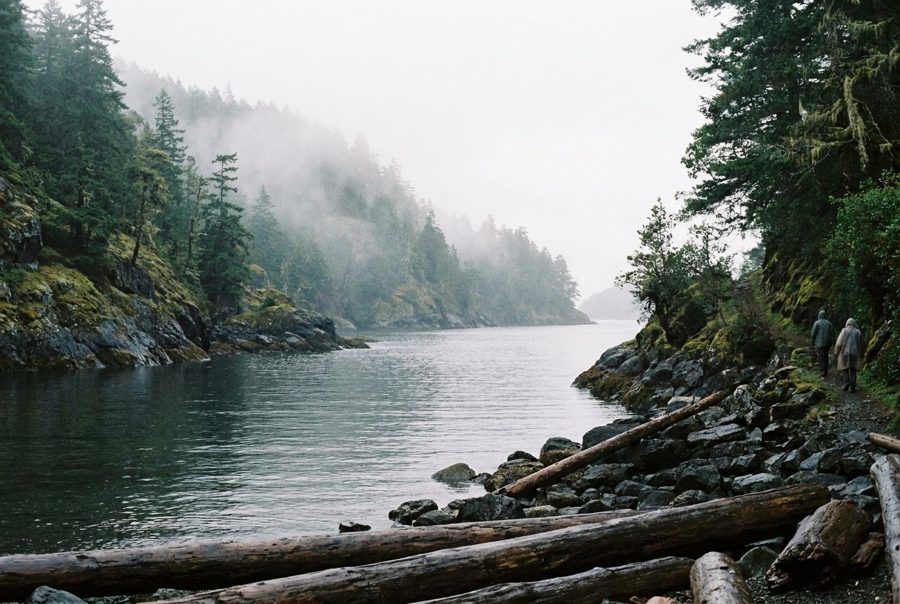 Salmon Inlet and the back country
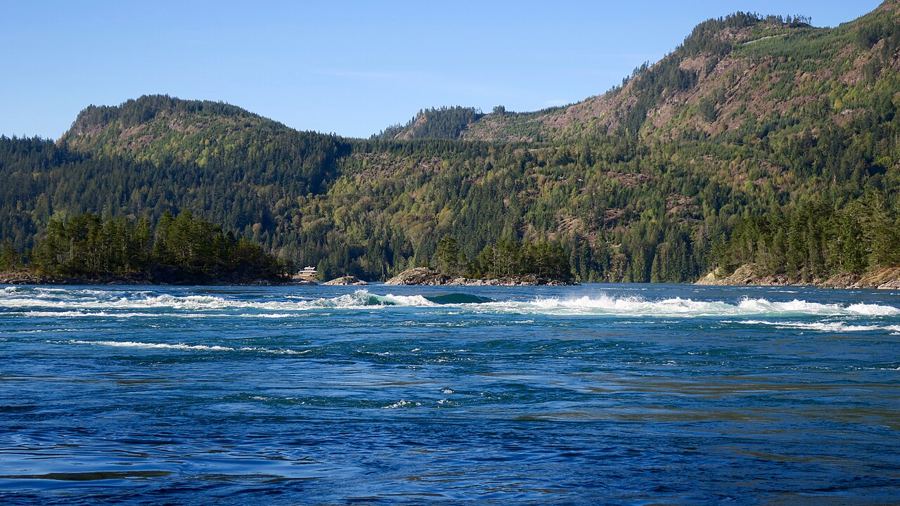 Skookumchuck Narrows, where the inlet pours through a gap
Camera work: Natulive Canada / CC-BY-SA-4.0
